ARC Greyhound Meetings: What They Are and How They Work
Best Greyhound Betting Sites – Bet on Greyhounds in 2026
Loading...
The Company Behind the Fixture List
If you bet on greyhound racing in the United Kingdom with any regularity, you are betting on ARC meetings whether you know it or not. The Arena Racing Company is the largest operator of greyhound and horse racing venues in Britain, and its influence on the structure, scheduling, and commercial operation of greyhound racing is substantial. At Kinsley, every meeting on the regular fixture list runs under the ARC banner.
Understanding what ARC is, and how its commercial model shapes the racing you bet on, is not essential for picking the winner of a single race. But it is useful background for understanding why the fixture list looks the way it does, why certain meetings are more heavily covered by bookmakers and media than others, and why the rhythm of racing at a track like Kinsley follows the pattern it does. The business model behind the racing affects the racing itself, and the punter who understands the structure is better placed to navigate it.
What Is the Arena Racing Company
The Arena Racing Company operates a portfolio of racecourses and greyhound stadia across the UK. The company owns sixteen racecourses and five greyhound stadia (Central Park, Nottingham, Perry Barr, Newcastle, and Sunderland), and through its Premier Greyhound Racing operation represents the media rights of fourteen UK greyhound tracks in total. Its business model was built through a series of acquisitions and mergers that consolidated ownership and media representation of multiple venues.
ARC’s business model is built on three revenue streams: on-course activity (admission, food, and beverage at the venue), media rights (the sale of live race coverage to bookmakers and broadcasters), and betting partnerships (commercial relationships with bookmakers who use ARC’s race content as a product to offer their customers). Of these three, media rights are the most significant driver of ARC’s greyhound operation. The live pictures of greyhound races are valuable to bookmakers because they provide a constant stream of short-duration betting events throughout the day and evening.
This commercial structure has a direct influence on the fixture list. ARC schedules meetings to maximise the coverage across the week, ensuring that there is greyhound racing available for bookmakers to show and for punters to bet on at almost any time of day. Matinée meetings, afternoon sessions, evening cards — the timetable is designed to fill the gaps in the broader racing and sports calendar. The result is a dense fixture programme that gives punters frequent opportunities to bet but also produces a high volume of racing that can be challenging to analyse thoroughly.
ARC’s scale also means that it can negotiate commercial terms with bookmakers and broadcasters from a position of strength. The company controls a large proportion of the greyhound racing content available in the UK, which gives it leverage in media rights negotiations. For the punter, this is largely invisible — you see the races, not the contracts behind them — but it explains why ARC meetings dominate the schedules of online bookmakers and betting shop screens.
The company’s role extends to track management. ARC employs the racing managers, maintains the facilities, and sets the operational standards at its venues. The quality of the racing surface, the kennelling facilities, and the veterinary oversight are all influenced by ARC’s investment decisions. At well-maintained ARC tracks, the racing conditions tend to be consistent and the data reliable. At venues where investment has been lower, the quality may be more variable.
ARC at Kinsley
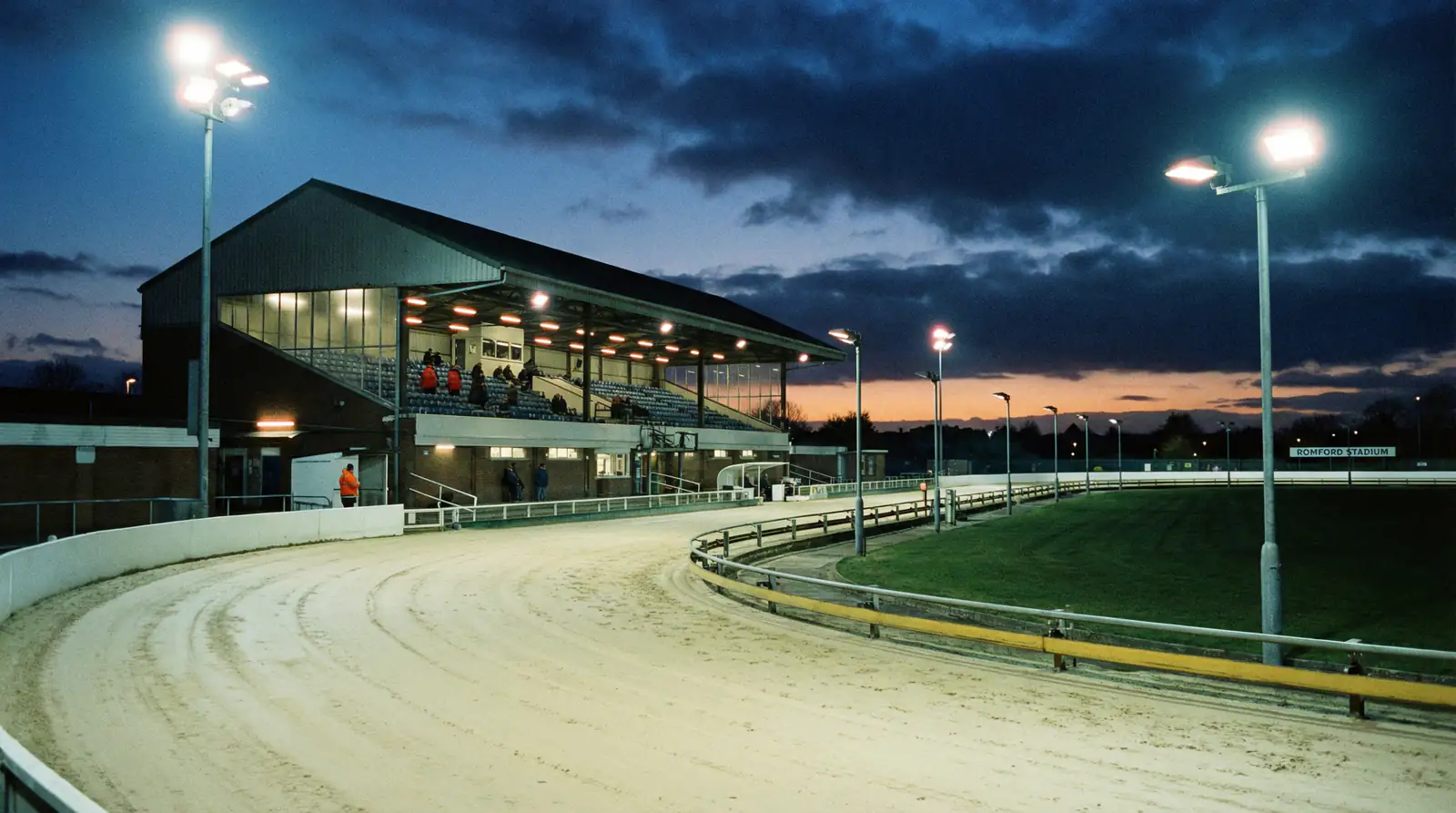
Kinsley’s fixtures are represented through ARC’s Premier Greyhound Racing media rights operation, running a regular fixture programme that typically includes three meetings per week. The standard schedule places meetings on Tuesday, Friday, and Sunday to fit within ARC’s broader broadcasting commitments, with occasional additional Saturday fixtures. The meeting times rotate seasonally, covering afternoon and evening slots.
The volume of racing at Kinsley is a direct product of the ARC model. Three regular meetings a week means that the track’s pool of racing dogs is heavily utilised. Dogs may race once or twice a week, and the racecard from meeting to meeting will feature many of the same names. For the punter, this frequency is a double-edged proposition. On one hand, it generates a constant flow of recent form data — most dogs have run within the last seven days, and their current form is fresh and relevant. On the other hand, the high frequency of racing means that dogs are under physical strain, and fatigue, minor injuries, and condition changes are more likely to affect performance.
Kinsley’s ARC meetings follow a standard format: typically ten to twelve races per card, with each race containing six runners plus reserves. The grade spread covers the full range available at the track, from the top A grades through to the lower grades, with sprint and staying races mixed into the programme alongside the standard 462-metre trip. This variety ensures that there is a range of betting opportunities on every card, though the quality and competitiveness of individual races varies from the top of the card to the bottom.
The track’s ARC affiliation also determines which bookmakers offer coverage. All major UK online bookmakers include ARC meetings in their greyhound betting markets, and the live streaming of ARC races is available through most bookmaker platforms. This accessibility is one of the practical benefits of ARC’s commercial model for the punter — finding markets, watching races, and placing bets on Kinsley meetings is straightforward through any licensed bookmaker.
Coverage and Broadcasting
ARC greyhound meetings are distributed to bookmakers and broadcasters through SIS (Sports Information Services), the primary provider of live racing content to the UK betting industry. SIS broadcasts live pictures and data from ARC tracks to betting shops, online platforms, and selected television channels. When you watch a Kinsley race on a bookmaker’s live stream or on a betting shop screen, the feed is coming through SIS.
Sky Sports Racing also covers selected ARC greyhound meetings, providing a higher-production broadcast with commentary, analysis, and replays. The Sky coverage tends to focus on the bigger meetings and feature events rather than every standard graded card, so not every Kinsley meeting will receive Sky attention. However, the SIS coverage is comprehensive — every race on every ARC card is broadcast live, ensuring that punters can watch the races they are betting on regardless of whether Sky is covering the meeting.
The broadcasting model has an indirect effect on betting markets. Meetings that receive more prominent coverage — those shown on Sky or during peak betting hours — tend to attract higher betting volumes. Higher volumes generally mean more efficient markets, as more money flowing through the odds produces prices that are closer to the “true” probabilities. Meetings with lower coverage — a Tuesday matinée at a small track, for instance — may have thinner markets and slightly less efficient prices. For the punter, less efficient markets are an opportunity: if you have done your form analysis, the odds may not fully reflect the true chances of each dog, and value is more likely to be available.
ARC’s push toward digital coverage has also expanded the availability of form data. Race replays, result services, and racecard databases are accessible online, and ARC-affiliated tracks generally provide more comprehensive data packages than non-ARC independents. At Kinsley, racecards with full form, sectional times, calculated times, and race comments are available through multiple platforms. This data richness is a practical asset for the form student — the more information you have, the better your assessments will be.
The ARC Effect
ARC’s dominance of UK greyhound racing has consequences that extend beyond the business pages. The high volume of racing at ARC tracks produces more data, more form, and more betting opportunities than would exist under a less commercially driven model. For the punter, this volume is largely positive — more races mean more chances to find value and more data to work with.
The potential downside is standardisation. ARC tracks operate under similar commercial pressures and scheduling demands, which can produce a sameness across the fixture list. The racing programme at Kinsley looks broadly similar to the programme at other ARC greyhound venues: the same number of races per card, the same grade structures, the same broadcasting format. This uniformity makes it easy to transfer your form-reading skills from one ARC track to another, but it also means that the character of individual tracks is less pronounced than it might be under independent ownership.
For the bettor, the practical implication is straightforward: ARC meetings are where the majority of UK greyhound betting takes place. The markets are accessible, the coverage is reliable, and the data is comprehensive. Whether the commercial model behind it all is ideal for the long-term health of the sport is a question for others. For the punter at the racecard, the question is simpler — can you read the form, find the value, and make it pay? The ARC framework provides the platform. What you do with it is up to you.