
Comparing Greyhound Tracks Across the UK
 Available in US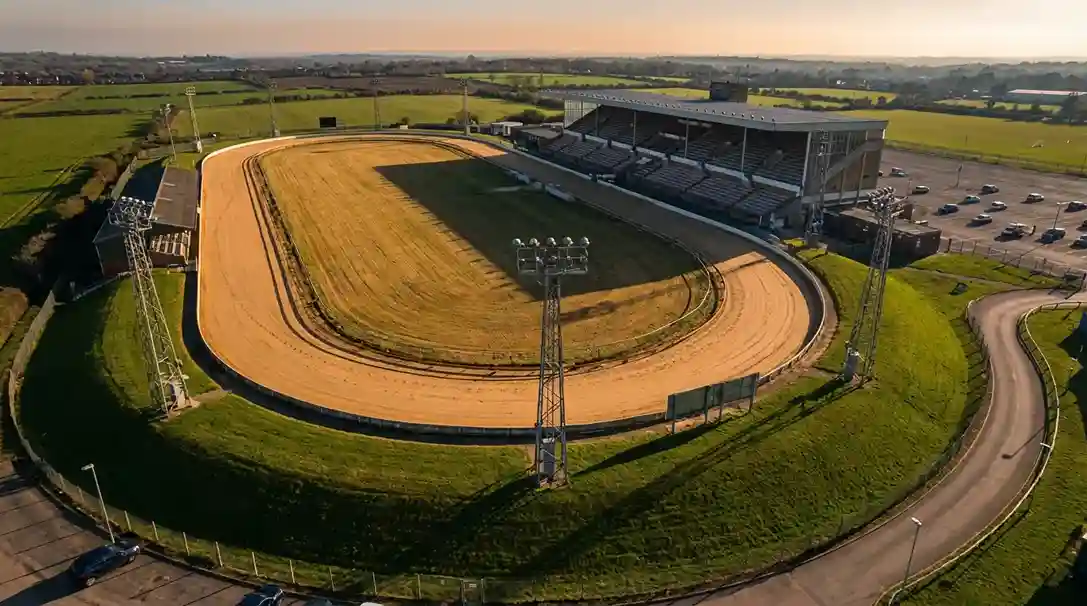
Not All Tracks Are Equal
A greyhound race at Kinsley is not the same event as a greyhound race at Monmore, Romford, or Towcester. The dogs are the same breed, the rules are the same, and the betting markets look identical on the bookmaker’s screen. But the tracks themselves — the dimensions, the bends, the surface, the grading depth — create different competitive environments that produce different results. Form earned at one track does not transfer automatically to another, and the punter who treats all UK greyhound venues as interchangeable is working with a flawed assumption.
Understanding how tracks differ is useful for two reasons. First, it improves your assessment of dogs that transfer between venues — a common occurrence in the UK greyhound circuit. Second, it helps you identify which tracks suit your analytical approach and which offer the most favourable betting conditions. Not every track is equally profitable for every punter, and knowing where your edge is strongest is a practical advantage.
Compare Kinsley with other greyhound tracks on the kinsleydogresults homepage.
Track Dimensions and How They Shape Racing
The circumference of a greyhound track determines the tightness of the bends, the length of the straights, and the overall character of the racing. UK tracks range from approximately 380 metres in circumference at the smaller venues to over 460 metres at the largest. Kinsley sits at the compact end of the spectrum with a circumference of roughly 385 metres. By contrast, Towcester, one of the larger modern tracks, has a circumference of approximately 420 metres.
The practical effect of circumference is felt on the bends. A smaller track has tighter turns, which means dogs change direction more sharply and the centrifugal forces are greater. Dogs that gallop with a smooth, balanced action handle tight bends better than dogs with a long, reaching stride that is more suited to sweeping turns. At Kinsley, the compact bends reward agility and adaptability. At a larger track, raw speed and stride length are more readily converted into finishing position because the bends are gentler and less disruptive.
The length of the straights also varies with circumference. Longer straights give dogs more time to accelerate and establish positions before reaching the next bend. Shorter straights compress the action, meaning that the gaps between dogs are narrower and the margins of victory tend to be smaller. At Kinsley, the relatively short straights contribute to the track’s competitive nature — there is less time for a faster dog to draw clear, and the field often arrives at each bend in a tight group.
Race distances are track-specific. The standard trip at Kinsley is 462 metres, but the equivalent “standard” distance at other tracks varies depending on the circumference and the position of the starting traps. Nottingham’s standard is 500 metres. Romford’s is 400 metres. These differences mean that a “standard-trip” dog at one venue is not racing over the same distance as a “standard-trip” dog at another, which complicates cross-track form comparisons.
Sprint and staying distances are similarly track-specific. Kinsley’s 268-metre sprint and 650-metre staying trip do not correspond exactly to the sprint and staying distances at other venues. When assessing a dog that has transferred from another track, the first question is whether the distances available at the new venue match the distances the dog has been racing over. A dog that excels at 480-metre standard trips may find Kinsley’s 462-metre trip slightly short, or it may relish the sharper pace. The adjustment is part of the analytical challenge.
Grading Depth: Big Tracks vs Small Tracks
The depth of a track’s grading structure depends on the size of its racing dog pool. Major stadiums in metropolitan areas attract trainers from across a wide region and maintain a deep pool of active dogs, which allows a wide spread of grades from A1 at the top to A10 or beyond at the bottom. Each grade band contains enough dogs to fill competitive six-runner fields, and the difference in ability between adjacent grades is relatively large.
Smaller tracks like Kinsley operate with a shallower pool. Fewer dogs means fewer grade bands, and the difference between adjacent grades is compressed. An A3 dog at Kinsley is closer in ability to an A4 dog at Kinsley than an A3 at a major stadium is to an A4 at the same stadium. This compression has a direct impact on racing — fields are more closely matched, races are harder to predict, and the favourite wins less often than at tracks where the grade spread is wider and the class differences between runners are clearer.
For the bettor, grading depth affects value. At tracks with deep grading, the hierarchy is more established, and the market is generally more efficient at identifying the likely winner. At tracks with shallow grading, the uncertainty is higher, and the market’s pricing is less reliable. This uncertainty cuts both ways: it makes winners harder to find, but it also means that when you do identify an edge, the odds are more likely to be generous because the market has not priced the race with the same confidence.
Grading depth also affects the interpretation of grade changes. A dog promoted from A5 to A4 at a major track is facing a meaningful step up in class. The same promotion at Kinsley is a smaller jump because the grades are closer together. Conversely, a dog dropping from A3 to A4 at Kinsley has less of a class advantage over its new opponents than the same grade drop would provide at a bigger venue. Calibrating your expectations for grade moves according to the track’s grading depth is a necessary adjustment that many punters neglect.
Favourite Win Rates by Track
The favourite’s win rate is one of the simplest measures of a track’s predictability. Across all UK GBGB tracks, the average favourite strike rate sits at approximately thirty-three to thirty-four per cent — the favourite wins roughly a third of all races. But individual tracks deviate significantly from this average, and the deviation tells you something about the competitive environment.
Tracks with high favourite win rates — above thirty-five per cent — tend to be larger venues with deeper grading and clearer class distinctions between runners. The better dog wins more often because the grade structure separates ability levels more effectively. The market at these tracks is relatively efficient, and the returns from backing favourites, while positive in terms of strike rate, are eroded by the short prices.
Tracks with low favourite win rates — below thirty-two per cent — are typically smaller venues with compressed grading, like Kinsley. The fields are more competitive, upsets are more frequent, and the market struggles to identify a clear favourite in many races. Kinsley’s favourite strike rate hovers around thirty-one to thirty-two per cent, placing it among the less predictable venues in the GBGB network.
For the punter, a low favourite win rate is not inherently good or bad — it is a characteristic that shapes the optimal betting strategy. At low-strike-rate tracks, the value is less likely to be found in backing favourites and more likely to be found in identifying outsiders and second-fancied runners that the market has underestimated. Each way betting, forecasts, and longer-priced selections tend to be more productive at tracks like Kinsley than at venues where the favourite dominates.
Conversely, at high-strike-rate tracks, the favourite is a more reliable anchor for forecasts and multiples, and lay-the-favourite strategies on betting exchanges face a stronger headwind. The track’s competitive profile should inform not just your selections but the type of bets you place and the staking approach you adopt.
Finding Your Track
Most successful greyhound punters specialise. Rather than spreading their analysis across every track in the country, they develop deep expertise in one or two venues and focus their betting where their knowledge is strongest. The logic is sound: a punter who knows every trainer, every dog, every trap bias, and every grading quirk at a single track is operating with a richer information set than a punter who superficially covers a dozen venues.
Choosing which track to specialise in depends on a combination of factors. Access to form data is essential — you need reliable racecards, results, and race comments for every meeting. Most ARC tracks, including Kinsley, provide comprehensive data through standard form services and bookmaker platforms. Access to live coverage matters too — watching the races, whether on a stream or at the track, adds a layer of understanding that data alone cannot replicate.
See our full Kinsley track guide in kinsley track guide.
The track’s competitive profile should also influence your choice. If your analytical strength lies in identifying value at longer prices, a track with a low favourite strike rate and compressed grading — like Kinsley — suits your approach. If you prefer the clarity of a well-defined class structure and are comfortable backing shorter-priced selections, a larger track with deeper grading may be more productive.
There is no objectively best track. There is the track that best matches your analytical skills, your available data, your viewing habits, and your betting style. Finding that match, and committing to it, is one of the most impactful strategic decisions a greyhound punter can make. The dogs at every track are running as fast as they can. The question is where you, specifically, can read them best.
