The Television Trophy and Gymcrack at Kinsley
 Available in US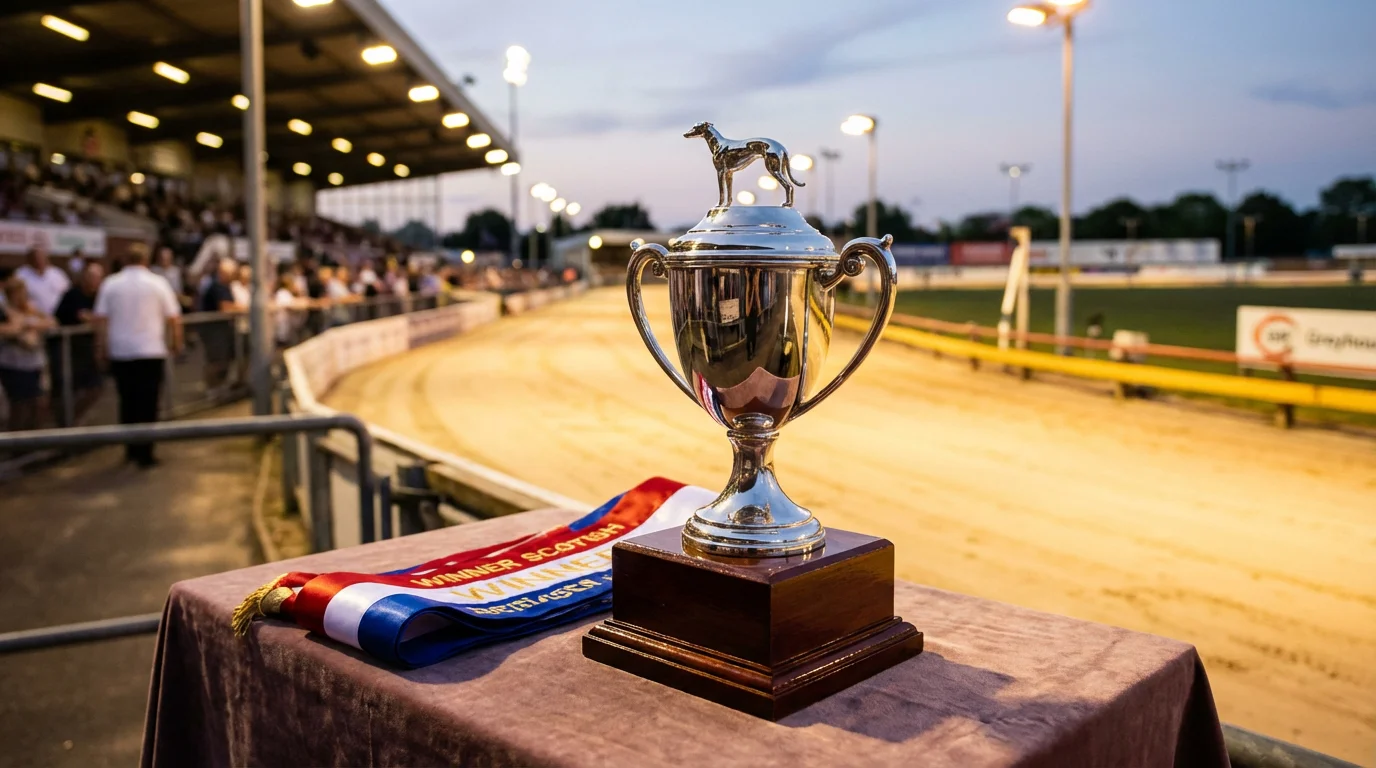
When Kinsley Stages Its Best
Every greyhound track has its calendar highlights — the events that sit above the regular graded programme and draw stronger fields, bigger crowds, and sharper betting markets. At Kinsley, the Television Trophy and the Gymcrack are the prestige fixtures that punctuate the routine of standard racing and give the track its competitive identity. These are not ordinary meetings. They attract dogs and trainers from across the region, offer elevated prize money, and produce racing that is several notches above the typical Tuesday evening card.
For the punter, prestige events represent both an opportunity and a challenge. The fields are stronger, the form is harder to separate, and the betting markets are more active. But the elevated quality of the competition also means that the racing is closer to a genuine test of ability, with fewer weak runners distorting the results. If your form analysis is sound, these events can be among the most profitable on the calendar.
Follow Kinsley’s major race events on the kinsleydogresults homepage.
The Television Trophy
The Television Trophy is Kinsley’s flagship open-race competition, contested over the track’s standard 462-metre trip. The event takes its name from the era when televised greyhound racing was a significant part of the British sporting calendar, and its continuation at Kinsley reflects the track’s position as a venue with a competitive heritage that extends beyond the day-to-day graded programme.
The competition format typically involves heats, semi-finals, and a final, with the rounds spread across successive meetings. Dogs qualify for the later stages based on their finishing positions and times in the earlier rounds, ensuring that the final brings together the fastest and most consistent performers from the competition. The multi-round structure creates a narrative arc that builds across several weeks — a feature that distinguishes prestige events from the one-off nature of standard graded races.
The fields in Television Trophy rounds are open — not restricted by grade — which means the competition attracts dogs from across the upper grades at Kinsley and, in some years, entries from trainers based at other tracks who bring dogs specifically for the event. The open format produces a higher standard of racing than the graded programme, because the best dogs at the track are concentrated in a single competition rather than spread across different grade bands.
The heats are the analytical starting point. They reveal which dogs are in the best form, which handle the pressure of a competitive open field, and which post the fastest times under conditions that are more demanding than a routine graded race. The semi-final times, combined with the race comments from the heats, provide a detailed picture of each contender heading into the final. By the time the final night arrives, the punter who has followed the competition from the first round has a deeper understanding of the remaining runners than can be gained from a single racecard.
Prize money for the Television Trophy is the highest on Kinsley’s calendar, which incentivises trainers to have their best dogs at peak fitness for the event. This means the form recorded in the competition is generally more reliable than standard graded form — the dogs are fully prepared, the trainers are invested, and the racing is conducted at the highest intensity the track produces.
The Gymcrack
The Gymcrack is Kinsley’s second prestige competition, traditionally run over a different distance from the Television Trophy to test a distinct set of abilities. Where the Television Trophy is contested over the standard 462-metre trip, the Gymcrack has historically been staged over the sprint or middle distance, depending on the year’s scheduling. The variation ensures that the two events reward different qualities — the Television Trophy tests all-round racing ability over four bends, while the Gymcrack places a premium on early speed or stamina depending on the trip.
The Gymcrack name has deep roots in British racing. The term has been borrowed from horse racing, where it refers to a prestigious two-year-old race at York Racecourse. In the greyhound context, the name carries the same connotation of quality and tradition, signalling an event that stands apart from the regular card. The longevity of the competition — it has been a fixture at Kinsley for many years — gives it a weight in the track’s calendar that newer events would struggle to replicate.
Like the Television Trophy, the Gymcrack follows a multi-round format with heats leading to a final. The entry criteria and qualifying conditions are set by the racing manager, and the specific rules may vary from year to year depending on the available dog pool and the track’s scheduling commitments. In some years, the competition is restricted to Kinsley regulars. In others, it is opened more widely to attract entries from neighbouring tracks. The format details are published in advance of the first round, and the racecard for each round carries the full conditions.
The betting dynamic on the Gymcrack differs from the Television Trophy depending on the distance. If the event is staged over the sprint trip, early pace becomes the dominant form factor, and dogs with proven fast sectional times are the primary contenders. If it is run over a middle or staying distance, stamina and bend work become more important, and the analysis shifts accordingly. The punter’s approach should be dictated by the distance of the specific year’s competition rather than by any assumption about what the Gymcrack “always” tests.
What Prestige Winners Tell You
The roll of honour for Kinsley’s prestige events is not just a list of names — it is a data set. The dogs that win the Television Trophy and the Gymcrack share certain characteristics that are worth noting because they reveal what it takes to succeed at the highest level of competition the track offers.
Winners of multi-round competitions tend to be dogs with a combination of speed and consistency. A dog that posts a blistering heat time but fades in the semi-final lacks the sustained form required to win across multiple rounds. The dogs that reach the final and win are typically those that have produced solid, repeatable performances throughout the competition — not necessarily the fastest single run, but the most reliable sequence of runs. This consistency is a quality that can be identified in advance by studying the dog’s form record. A dog with a string of competitive performances across its last six or eight outings is a more likely competition winner than a dog with one standout run and several mediocre ones.
Trap draw plays a different role in prestige events than in standard graded racing. In a regular A4 race, a favourable trap draw might give a dog a structural advantage over opponents of similar ability. In a Television Trophy final, where every dog is a proven performer, the draw is less decisive because the quality of the field compensates for positional disadvantages. A strong dog drawn wide in a prestige final is still dangerous, because its ability level is higher than the standard races where trap draw tends to matter most.
Trainer form is also amplified in prestige events. The trainers who consistently produce finalists in the Television Trophy and the Gymcrack are those with the skill to peak a dog’s fitness for a specific competition. This is a subtler form of trainer ability than day-to-day kennel management — it involves timing the dog’s preparation so that it arrives at the final in the best possible condition, having navigated the heats and semi-finals without burning out. Trainers with a strong record in Kinsley’s prestige events deserve extra respect when they have runners in the later stages of these competitions.
Why These Races Matter
Prestige events matter to the punter for a simple reason: they produce the highest-quality form on the track’s calendar. The Television Trophy final and the Gymcrack final are the races where the best dogs at Kinsley meet under the most competitive conditions. The form generated in these events is more predictive than standard graded form because it is produced against stronger opposition under greater pressure.
A dog that finishes third in a Television Trophy final, beaten two lengths by a high-class winner, has demonstrated a level of ability that may not be apparent from its regular graded form. When that dog returns to the standard A3 or A4 programme, it is bringing Television Trophy final form to a lower level of competition. The market may price it based on its recent finishing position — third — without fully accounting for the quality of the company it kept. This is a classic value scenario: the dog is better than it looks because the context of its recent run was stronger than the context the market is evaluating.
Plan ahead with the full racing schedule in greyhound racing schedule.
The same logic applies to dogs that run well in early rounds but fail to reach the final. A heat winner that is eliminated in the semi-final has still shown form well above the standard graded level. Its next graded run should be assessed in light of the competition it faced, not just the result.
Beyond the form implications, prestige events give the track its identity. They are the nights when the racing at Kinsley is at its most engaging, the fields are at their strongest, and the betting markets are at their most active. For the punter who follows the track regularly, they are the calendar markers that elevate the routine into something worth paying close attention to. The dogs run fast on any given Tuesday. On Television Trophy night, they run fast and it means something.
